
Gulf Coast Sheep: The History and Wool of a Rare American Breed
Meet the Sheep That Flourished in the Deep South
In the Gulf Coast region of the southern United States lives a scrappy sheep with a history older than the oaks and pines that shade their pastures. The Gulf Coast sheep, also known as Gulf Coast Native sheep and a few other names, is one of North America’s oldest landrace breeds. Shaped by centuries of natural selection, these sheep developed a remarkable ability to thrive in the heat, parasites, humidity, and other challenges of the Deep South.

The History of Gulf Coast Sheep
The genetic origins of the Gulf Coast breed reach back to sheep brought to North America by Spanish settlers and missionaries beginning in the 1500s. Spanish sheep were brought to the Gulf Coast for meat, milk, and wool, and some were left to roam and reproduce with relatively little human intervention.
These early sheep included churro sheep, sometimes spelled churra sheep, which descended from the sheep brought to the New World by Spanish explorers and settlers. Over generations, sheep living in the challenging environment of the Southeast were shaped by natural selection. The result was a population of hardy, productive sheep remarkably suited to the humidity of the South.
The story of Gulf Coast sheep is part of a much larger history of livestock in North America. Spanish flocks spread across the New World alongside European settlers, and sheep became important multi-purpose animals for families who relied on them for food and fiber. Sheep and other livestock also interacted with the agricultural practices of Native Americans, Spanish settlers, and later Southern families.
Unlike modern breeds developed for a narrow production goal, Gulf Coast sheep retained many of the characteristics of these older, pre-Merino types. They developed into a wide variety of types, with variation in size, appearance, fleece, and other traits depending on the particular flock and its history.

A Sheep Built for the South
Gulf Coast sheep lack wool on their faces, bellies, and legs. This is one of the many aspects of their physical appearance that reflects their exquisite adaptation to a hot, humid environment.
They are also parasite resistant. Gulf Coast sheep have a well-documented resistance to internal parasites, particularly compared with many modern sheep breeds. They are able to make good use of native grasses and other good forage. Many flocks thrive with relatively little intervention.
For centuries, these were the sheep of Southern families, often raised for home production rather than commercial-scale agriculture. They provided meat and wool and could reproduce and raise new lambs without the intensive management required by some modern breeds.

The Decline of Gulf Coast Sheep
At one point, Gulf Coast sheep were the primary sheep of much of the Southeast. But during the 20th century, the development of anti-parasite medications changed sheep production. New medications made it easier to raise breeds that were less naturally resistant to parasites. Very quickly, many shepherds replaced Gulf Coast sheep with larger, faster-growing meat breeds.
The changes accelerated after World War II, as American agriculture became increasingly specialized and sheep production shifted toward breeds selected for particular commercial traits.
Today, Gulf Coast sheep are one of the rare sheep breeds of the United States. The breed is included on the conservation priority list maintained by the Livestock Conservancy.
Their valuable performance characteristics may prove increasingly important in the future. As parasite resistance becomes more critical in a world facing increasing drug resistance, the genetics of these hardy sheep may have something to offer modern farmers.

Gulf Coast Sheep, Gulf Coast Native, and Other Names
A note on the name: “Gulf Coast Sheep” is the official breed name used by the Gulf Coast Sheep Breeders Association. Gulf Coast Native, or GCN, is the traditional name and is used to distinguish some of the historical, closed-line flocks from modern, mixed-line flocks.
You may also encounter names such as “Louisiana Native” and “Florida Native,” as well as other regional names. This variety of names reflects the long history and isolation of different strains of the breed across the Southeast.
There are also research flocks and private efforts working to document and conserve different populations of Gulf Coast sheep. This work is important because maintaining genetic diversity within a rare breed can help preserve the valuable characteristics that developed through generations of adaptation.
My Experience Working With Gulf Coast Native Wool
As a handspinner in Louisiana, I was naturally drawn to this local breed. There is something particularly satisfying about working with fiber produced by sheep that have adapted to the same humidity of the environment where I live.
Gulf Coast’s wool ranges from fine to medium, typically around 26 to 32 microns, although individual fleeces can vary considerably. Some sheep produce surprisingly fine wool, while others have coarse wool better suited to rugs, outerwear, and other hard-wearing projects.
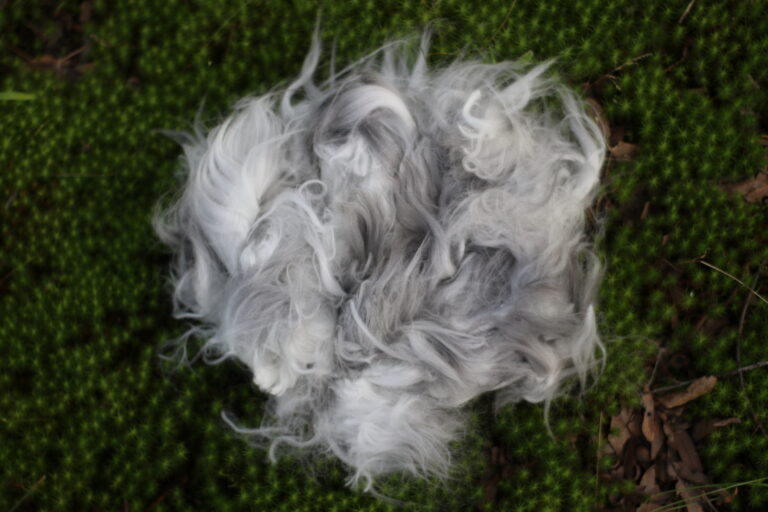
Like many heritage breeds, fleece quality varies. Some fleeces have lovely open locks that are a joy to process; others are a little tippier and take more work. But we have to give the sheep credit for growing wool in hurricane country!

Spinning and Blending Gulf Coast Wool
The staple length is typically around 2.5 to 4 inches and is easy to spin. The wool can have a beautiful crimp and lively character, and it makes lovely yarn.
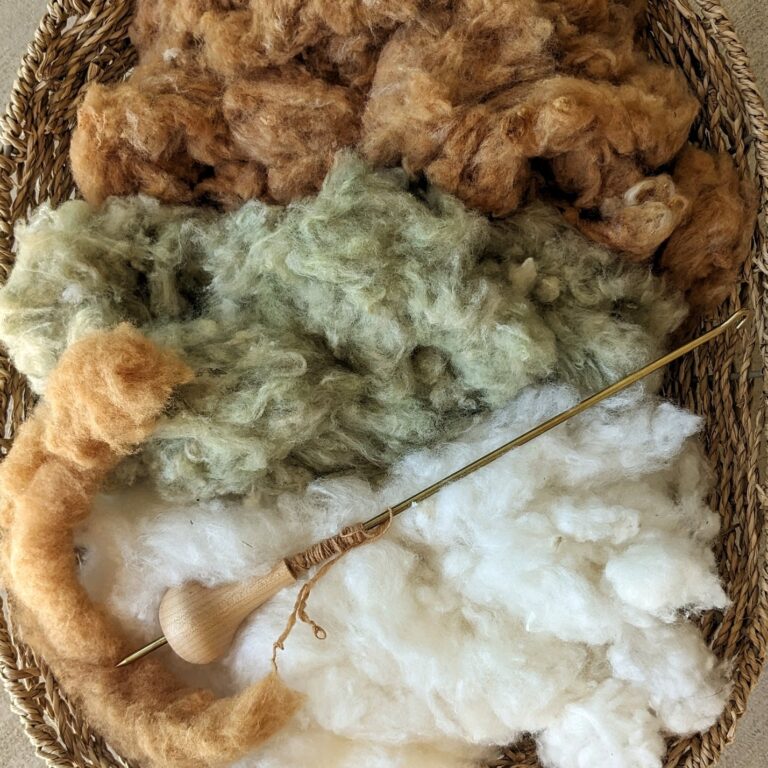
I’ve spun Gulf Coast wool on its own, blended it with angora from my rabbits, and most recently with homegrown cotton. I’ve also used it in blends with other regional fibers. Gulf Coast wool takes natural dyes beautifully and can also be felted.
One of my favorite things about this wool is that it doesn’t have to be treated as a single, uniform material. The wide variety of wool types found within Gulf Coast sheep gives spinners a lot to explore. A fine fleece can become yarn for clothing, while a coarser fleece may be perfect for rugs or other durable textiles.

Fascinating History
Working with Gulf Coast wool is also emotionally rewarding for history lovers. As I spin, I often imagine Southern families raising wool and cotton for home production, using the resources available around them to clothe their families and meet their everyday needs.
These sheep have been quietly contributing to the region’s food and fiber systems for centuries. When I spin Gulf Coast wool today, I feel connected to that much longer history of people, animals, land, and local materials.

Shepherd’s Perspective: Interview with Lynda Ingram of S&S Farms, Denham Springs, Louisiana
Lynda and her sister Cindy Walker restarted their family farm, S&S Farm of Denham Springs, Louisiana, together in 2011, and got their first Gulf Coast sheep in 2012.
What first drew you to this breed?
I had wanted wool sheep for a long time—the classic “If I grow my own wool then I can afford to spin”—but I did not think they would do well here in Louisiana. I met a nice spinner at a local craft event who introduced me to Gulf Coast wool. Then on the same day I talked to a friend who taught in the Louisiana State University College of Agriculture about the breed’s suitability for the environment. The rest is history.
How would you describe their personality?
GC are mainly calm and easy to handle. They are generally hardy and healthy sheep. They tend to be easy lambers, and are excellent mothers. Our sheep lamb and raise their lambs on pasture.
Because our sheep live on pasture 24/7, they tend to be standoffish, although they come when they are called to move to new pasture. I know other GC shepherds who are much more hands-on with their sheep, and their sheep are more like pets.
Anything else you’d like folks to know about this breed?
Gulf Coast wool is crimpy, spins well, and the yarn is fluffy. The fineness and softness are variable. In my flock there are sheep that produce wool suitable for almost any purpose—from next-to-skin soft to heavy outdoor wear or rugs.
We had our fleeces tested, and the results range from 23 to 34 microns. Because our sheep have varied fleeces, one of my favorite things as a spinner and wool vendor is matching fleeces to projects that I want to do or that my customers want to do.
Although this breed developed in the Southeast US, flocks of Gulf Coast Sheep have thrived in environments as different from the Southeast US as Wyoming, Maine, and Michigan.

Gulf Coast Sheep and Low-Input Sheep Production
One of the things that makes Gulf Coast sheep particularly interesting to me is their potential for low-input sheep production.
They were shaped by a challenging environment, rather than developed primarily under highly managed production systems. Their ability to thrive on pasture, tolerate heat and humidity, resist parasites, and raise lambs makes them valuable to farmers looking for productive sheep that can fit into a lower-input system.
Research into Gulf Coast sheep has documented traits such as parasite resistance, reproductive ability, and the ability to thrive under different environmental conditions.
These characteristics are part of what makes heritage and landrace breeds so interesting. Instead of selecting for only one production trait, generations of natural selection created animals with a collection of traits suited to their particular environment.
The Gulf Coast breed’s valuable performance characteristics may become even more important as farmers face increasing challenges from climate, parasites, medication resistance, and rising production costs.

Why Support Gulf Coast Sheep?
Raising Gulf Coast sheep, buying their wool, or spinning their fiber helps ensure their survival for future generations. Supporting the breed also supports the farmers, shepherds, researchers, and other people whose private efforts help maintain these rare sheep.
For spinners, their wool is a joy to work with. It offers a direct connection to a distinctive regional breed and to the long history of fiber production in the American South.
I especially love working with Gulf Coast wool because it allows me to take a material with a deep regional history and turn it into something useful today. The goal isn’t simply to preserve an old breed as a piece of history. These sheep are living animals with useful genetics and remarkable adaptations, and their fiber can still become beautiful, practical textiles.
If you’re a spinner, weaver, farmer, or simply someone interested in rare sheep breeds, consider seeking out Gulf Coast wool and learning more about the shepherds who raise them.
Where to Find Gulf Coast Wool
You can purchase Gulf Coast wool and blends from:
Lynda Ingram:
https://www.etsy.com/shop/SandSFarmofDS
Allie Reeves (raw fleeces):
https://www.facebook.com/groups/1098291124426706
Aleatha Shannon (yarn, batts, and blends):
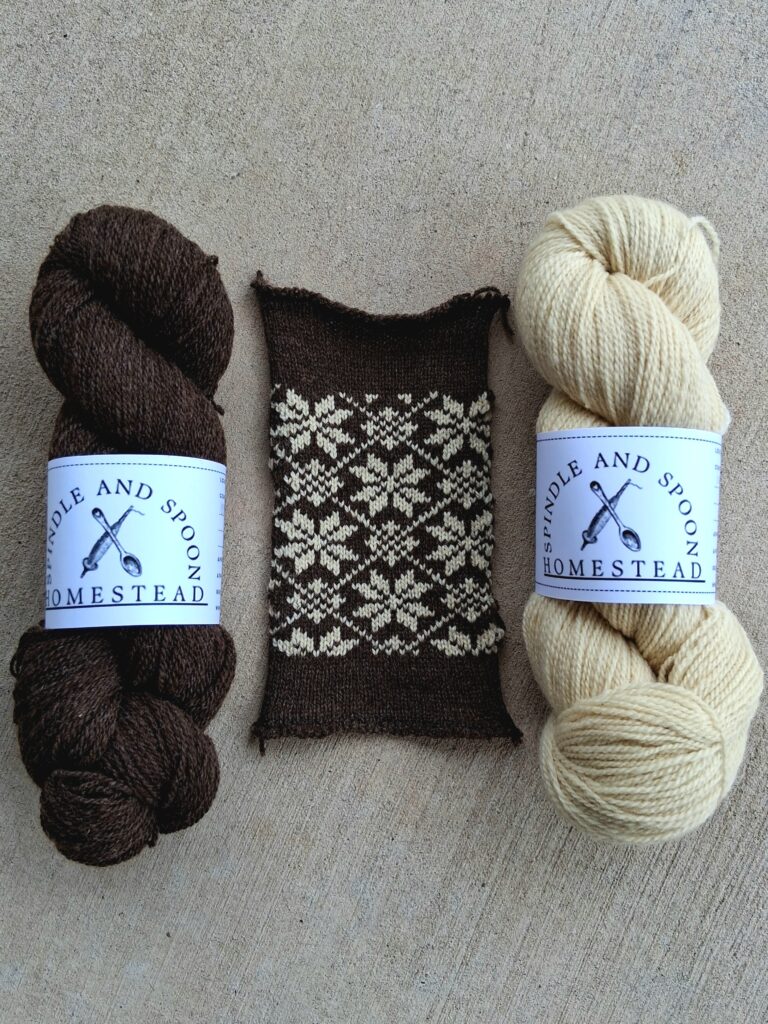
https://spindleandspoon.com/louisiana-grown/